
AGS San Francisco 2026: A Full House, Session by Session
App Growth Summit (AGS) San Francisco once again showed up in full force, and The Midway was already alive with exceptional app growth professionals before a single speaker took the stage!
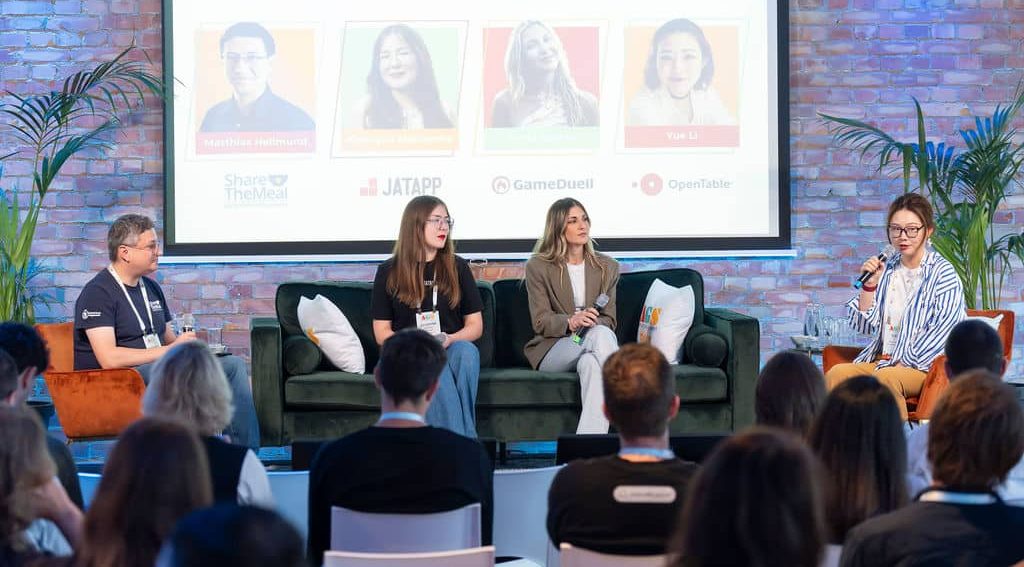
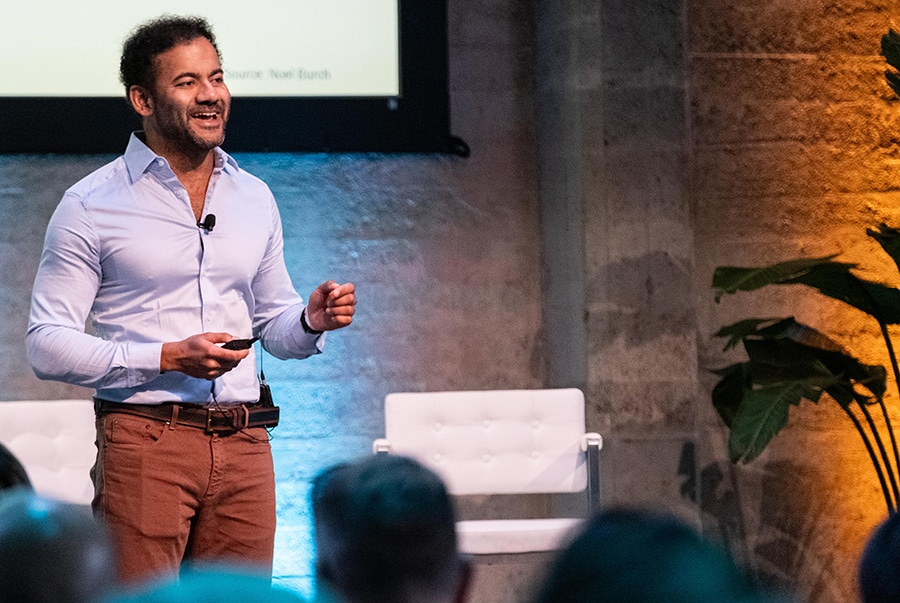
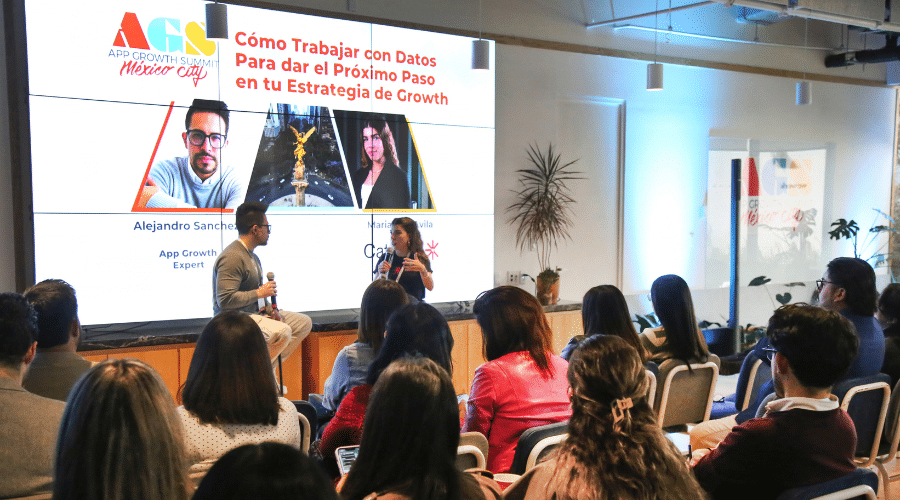
With coffee in hand and two stages warming up side by side, it felt less like a venue and more like a reunion. On September 24, 2026, 300+ app growth professionals and 35+ speakers spent the day across the Main Stage and the Experts Corner, trading conversations and filling notebooks.
The full recap deck, every session broken into its own slide, lands soon for anyone who wants the complete set in one place. Until then, here’s the day, talk by talk.
Adobe Express Maps Out the Real Difference Between Translating and Localizing an App
Adobe Express opened with Carey Flack’s “culturalization framework,” which separates true localization from a straight translation.

She mapped three intensities, translation, localization, and globalization, against six dimensions like pricing and legal compliance, pointing to Duolingo’s telenovela-style Brazil content and Slack’s lighter “Danglish” tone in Germany as proof.
Discord Makes Its Case for Servers as a Growth Channel
Discord’s Annie Belfield made the case for servers as a growth channel, not just a hangout.
With 90 million daily users and 65 billion messages sent a month, she walked through four ways brands can show up there, from rewarded “orbs” ads to running an owned server, the way more than 30 million communities already do.
Asapty’s Playbook for Apple Ads That Actually Scale
Asapty’s Viktor Orlov broke down why IPM, installs-per-mille, matters more than most Apple Ads metrics, and how an “invisible wall” caps auctions before marketers even notice.
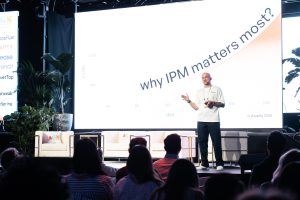
He backed it with two real outcomes. One game scaled 13x after tripling its IPM, while another client’s CPA spiked 2,000% from a misread campaign swing.
Snap Introduces a New Playbook for Unified Attribution and Smarter Bidding
Snap’s Nick Janner introduced a new Unified Attribution product that calibrates ad performance off real MMP signals, not platform data alone, paired with a four-piece Smart Solution Stack that Snap says delivers a 25% average install lift.

He also previewed value-optimization bidding and early cross-OS measurement spanning both app and web.
Three Founders Debate What Actually Makes a Subscription Paywall Work
A panel of three founders, Amir Hanna of Parrot, Kjartan Fosse of Knitandnote, and Jesse Paliotto of FastSpring, agreed the biggest lever is solving a real problem fast and getting users to “time to value” quickly, not adding feature depth.
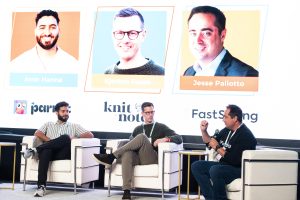
Knitandnote’s 30-slide onboarding hits a 95% completion rate by proving value before the paywall, and Parrot saw a 44% jump in proceeds after moving checkout to the web and routing users back into the app.
Varo Explains Why It Takes 98 Days to Know If a Customer Is Worth Keeping
Varo’s Drew Hampton and Bidease’s Dennis Mink explained why it takes 98 days, not 56, to know if a new customer is worth keeping.

An 80-variable predictive model kept breaking every time underwriting changed, so the team now runs simpler macro-level regression models every day, broken out by line of business and channel, a shift made trickier by fintech’s tight targeting rules.
Huckleberry Labs and AppsFlyer on Turning Incrementality Into Real Targeting Decisions

Huckleberry Labs’ Erich Detert and AppsFlyer’s Eran Dunsky shared how geo-lift testing uncovered a 60% incrementality factor on Meta, then went further, cross-referencing CDC birth-rate data through Claude to rebalance creative spend between newborn and expecting-parent audiences.
Four Growth Leaders on Reading User Behavior Over Guesswork
Million Victories’ Fabien-Pierre Nicolas, Mistplay’s Noa Gutterman, and Color Switch’s David Reichelt, moderated by Intuit’s Midori Chikamatsu, traded real numbers over guesswork.
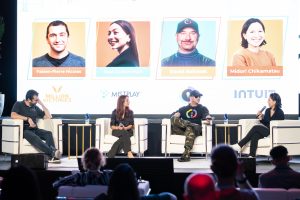
Reichelt noted Color Switch was roughly his 40th game attempt before one broke out. Gutterman’s sweepstakes “winner creative” made users twice as likely to stick around by day 60, and Nicolas took an app from 1 million to more than 10 million users with hyperlocal news segmentation.
CleverTap Makes the Case That Lifecycle Marketing Still Works
CleverTap’s Manuel Allende made the case that lifecycle marketing still works.

User intent peaks about two hours after registration, half of all purchases happen in the first month or never happen at all, and a Southeast Asia marketplace and Vi, a Vodafone subsidiary, both proved the point in production.
How DICK’S Sporting Goods Turned Its App Into an Actual Growth Engine
Dick’s Sporting Goods’ Matt Walker and Branch’s David Karnstedt walked through the app’s pandemic-era relaunch, built on a deliberate “crawl, walk, run” strategy.
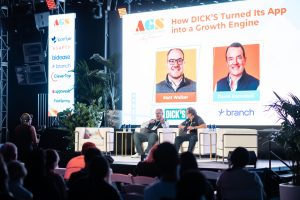
An in-app AI assistant called Coach and a loyalty program with built-in fitness-tracker rewards now sit alongside app-only Cyber Monday promotions that have kept the app at number 1 in the App Store three years running.
Four UA Leaders on Where AI Actually Helps and Where Judgment Still Wins
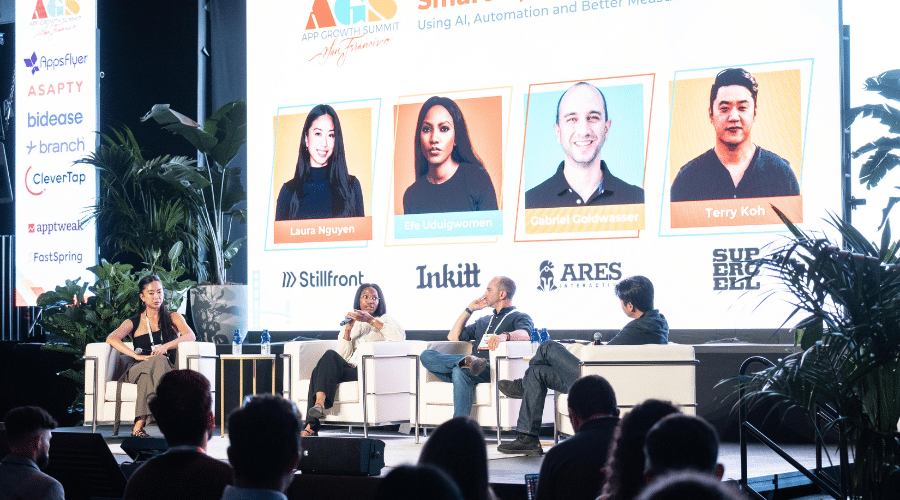
Stillfront’s Laura Nguyen, Inkitt’s Efe Uduigwomen, and Ares Interactive’s Gabriel Goldwasser, moderated by Supercell’s Terry Koh, debated where AI-era automation should take over and where human UA judgment still has to lead.

One test found that pulling back brand-search spend simply let organic traffic backfill it, and the panel’s shared takeaway was that AI works as a force multiplier for a UA team, not a replacement for one.
Lyft and RZR on Growth Marketing After the End of Easy Tracking
Lyft’s Kevin Hsu and RZR’s Jessica You covered growth after the end of easy tracking, from the GDPR work behind Lyft’s Free Now Europe acquisition to “Project Thanos,” its post-IDFA strategy built on fintech partnerships that route around MMP limits.

Both pointed to an incrementality-first culture, Google’s Meridian MMM, and creative targeted by regional supply and demand.
Inside The New York Times’ Games Business, From the 1942 Crossword to Wordle
The New York Times’ Jonathan Knight and Vivian Chang traced NYT Games from the original 1942 crossword to the 2022 Wordle acquisition, Connections, and Strands, using a “solar system” analogy in which news is the sun and games orbit it like planets.

About 25% of users share their Wordle score daily. Knight closed with one clear piece of advice. Design around users’ daily time, not their session count.
Square’s Case for Treating AI Like an Actual Teammate, Not Just a Tool
Square’s Sara San Antonio closed the Main Stage with a case for treating AI like an actual teammate.

She broke her approach into four pieces, MCPs, skills, hooks, and agents, each tied to a real Square example, an AppsFlyer MCP, a creative-QA skill that catches typo’d assets, and a broken-event alert that once traced a dead line of Android code by itself. Audience questions ranged from what she named her AI assistants to two coworkers pitting their synthetic AI selves against each other.
Five Takeaways from AGS San Francisco 2026
Across the day’s sessions at App Growth Summit San Francisco 2026, five lessons came with the strongest numbers behind them.
- Paywalls convert when users reach value fast. Amir Hanna of Parrot, Kjartan Fosse of Knitandnote and Jesse Paliotto of FastSpring agreed that a short time to value moves paywall conversion more than extra features do. Knitandnote’s 30-slide onboarding reaches a 95% completion rate by proving value before the paywall, and Parrot grew proceeds 44% after moving checkout to the web.
- Fintech LTV needs a longer read. Varo’s Drew Hampton and Bidease’s Dennis Mink explained why Varo moved its customer-value window from 56 to 98 days. Its 80-variable predictive model broke every time underwriting rules changed, so the team switched to simpler regression models it runs daily by line of business and channel.
- Incrementality tests should decide where the budget goes. Huckleberry Labs’ Erich Detert and AppsFlyer’s Eran Dunsky used geo-lift testing to find a 60% incrementality factor on Meta. Huckleberry then cross-referenced CDC birth-rate data through Claude and rebalanced creative spend between newborn and expecting-parent audiences.
- Lifecycle messages land best in the first hours. CleverTap’s Manuel Allende showed that user intent peaks about two hours after registration, and that half of all purchases happen in a user’s first month or never happen at all.
- AI works best with a defined job on the team. Square’s Sara San Antonio built her AI setup from four pieces: MCPs, skills, hooks and agents. Her examples included an AppsFlyer MCP, a creative-QA skill that catches typos in assets, and an alert that traced a broken event to a dead line of Android code.
The AGS San Francisco 2026 Insider Report, our full recap deck, will collect every session’s key takeaways and stats in one place when it goes live soon.
The Day Closes at the After Party
Sessions wrapped by late afternoon, and the after party picked up right where they left off. A few frames from the night are below.
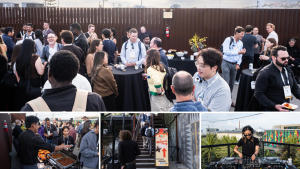
Request your invite to App Growth Summit Barcelona before the October 15 lineup fills in, and browse the full App Growth Summit event calendar to see every other invite-only room still ahead this year.
And keep an eye out for the full App Growth Summit San Francisco recap deck, landing soon with every session’s key takeaways broken out slide by slide!