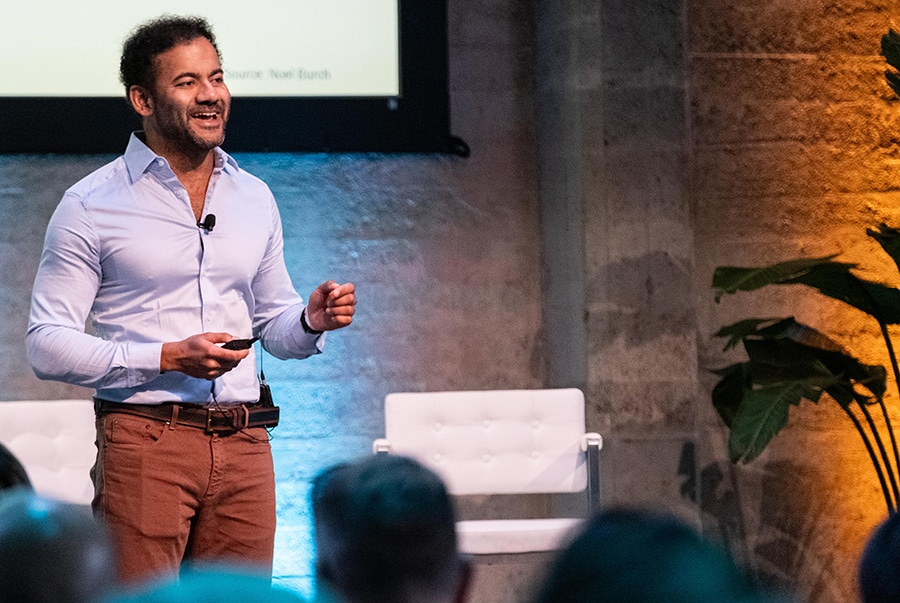

Insights from AGS Berlin – Brand and Performance Marketing Are Solving the Same Problem With Different Metrics

Ask a room full of growth marketers whether their company runs a dedicated brand team alongside performance, and the answer splits almost evenly down the middle. That fifty-fifty split, pulled from a live poll at a recent industry gathering, says less about budget than about how unresolved one question still is inside most companies: whose job brand falls under.
The Real Disagreement Is About Whose Metric Counts
Performance marketers often have a stock description of the brand team: a group that gets to chase creative ideas without ever answering for a number. Brand marketers often have their own stock description of performance: a team that will chase a click without paying much attention to what it costs the brand story along the way.

“Nobody on the performance side wakes up trying to kill your brand. They’re just optimizing for the number they’re held to.” AGS Berlin 2026
Both complaints usually point at something real, though each side is often pointing at the wrong failure. Brand work that never attaches a proxy metric makes it easy to write off as unaccountable, and one workable fix is treating impressions, engagement, and share of search as a proxy signal, the same way a performance team treats click-through rate: worth checking every few months, with a fuller brand-awareness read done every six to ten months since it moves too slowly to check weekly. Performance teams, meanwhile, are often running brand campaigns already.
The other pattern worth naming: a founder who asks for brand and gets a single campaign, then wants to know why the whole market doesn’t recognize the name yet. Spending fifty thousand dollars on brand awareness while spending three million on acquisition and expecting instant recognition is a bit like expecting a whisper to carry across a stadium, an expensive way to relearn what patience costs. Brand takes repetition over a long stretch of time to land, and setting that expectation early avoids the awkward conversation months later about why the campaign “didn’t work.”

When Brand Sits Outside the Room
The most common way this goes wrong is structural, not personal: a team sits apart from product and marketing, sees new work only after the key decisions are already made, and ends up checking it against a guideline instead of shaping it from the start. Neither side gets much out of that setup. The performance team experiences it as a bottleneck to plan around, and the brand team, kept out of the room where the real decisions happen, spends more energy defending a guideline than building something people notice.
“The moment brand only shows up to review work after it’s already shipped, the argument’s already lost.” AGS Berlin 2026
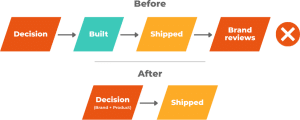
The better version treats brand as something built into the product from day one, part of every decision instead of a review stapled on at the end. One useful practice: a quarterly pass through every touchpoint a user sees, from the onboarding copy to the wording on a paywall, checking whether the same promise shows up consistently or gets diluted somewhere along the way. A storefront window can say anything to get someone through the door, but the experience waiting inside is what decides whether they stay, and that part belongs to everyone building the product.
This is also where the instinct to cut brand first during a budget crunch tends to backfire. When cost per acquisition climbs and the usual audience stops converting, the fix is frequently a new niche the existing targeting never considered, and finding that niche is brand work, the very function a team just cut.
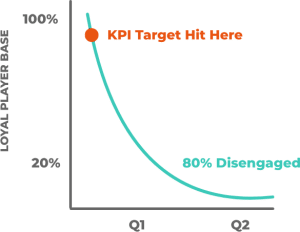
A related trap shows up even without a budget cut, just from setting a quarter’s KPIs around one short-term number and hitting it. One team chasing a monetization target hit the numbers they were aiming for, then watched roughly 80 percent of their loyal player base disengage over the following two quarters. The number they hit was real. The horizon they measured it against was too short.
Why Consistency Matters More Than It Used To
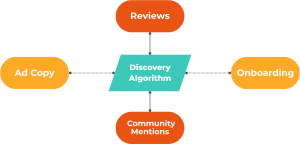
There’s a newer reason the brand-versus-performance split makes less sense than it used to. Discovery increasingly runs through systems that read a product’s reputation across every place it shows up: reviews, community mentions, ad copy, the words used in onboarding, well beyond a polished brand deck.
Those systems reward a name that means the same thing everywhere it appears and get confused by one that doesn’t. A promise made in an ad and then abandoned by the time someone opens the app shows up as a signal a discovery algorithm can pick up on, the kind of gap that used to stay a quiet handoff issue between two teams.
Performance keeps the same budget and the same urgency it already has in this framing. What changes is ending the fight over which department gets the bigger slice of it, and starting a conversation about which team owns making sure the story stays the same everywhere a customer runs into it.
If your growth budget got cut this year and brand went first, it’s worth asking who would have found the niche that gets you out of a rising-cost-per-acquisition hole in the first place, the kind of question that gets argued out loud at AGS events. The same kind of conversation plays out live too, at invite-only events that rotate to a new city every few weeks, Berlin, São Paulo, Tokyo among them. Check the App Growth Summit event calendar and request your invite now!